The Architect Beyond the Walls of the World
There are moments on the road when a traveler stops not because the path is hard, but because a truth rises like a cairn left by those who walked before. Watching Episode 1 of The Creed — Bishop Robert Barron’s meditation on belief — felt like encountering one of those markers. Not a lecture, not an argument, but a lantern held up in the dusk for anyone who has ever wondered what it means to say, I believe in God.
What struck me first was John Henry Newman’s insight: faith is not the enemy of reason. Faith is the reasoning of a mind turned toward God. We use the same inner tools — inference, trust, experience, judgment — whether we are weighing the reliability of a friend or the truth of the divine. Faith is not a leap into the dark; it is the same human reasoning we use every day, simply extended toward the deepest questions.
Bishop Barron then offered a way of seeing the ancient creeds that felt like a gift. The Nicene and Apostles’ Creeds are not merely lists of doctrines. They are guardrails, signposts, the markers along a pilgrimage into God. Not toward God as a distant object, but into the mystery of the One we can never fully comprehend. If we could grasp Him entirely, He would not be God. Yet we can journey — learning His character, His intentions, and the strange way our small lives fit into His vast design.
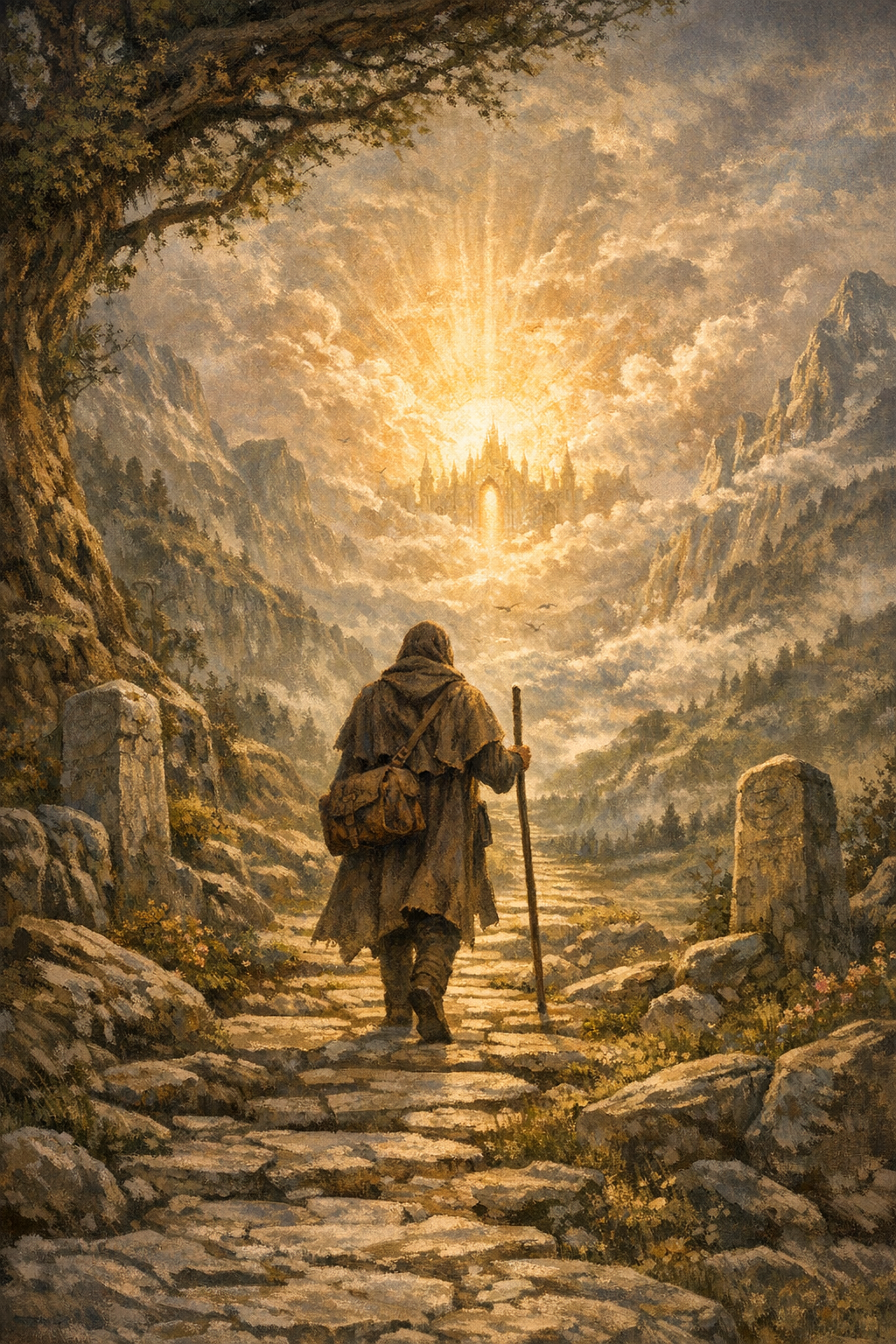
One image lingered with me: the architect and the building. You can study the building, admire its beauty, infer the mind that shaped it — but you will not find the architect hiding behind a column. He is not in the building as one of its parts. So it is with God. The world bears His fingerprints, His logic, His mercy, His echoes — but He is not one more item within creation. He is the reason there is anything at all rather than nothing.
The episode also touched on the modern temptation of Scientism — the belief that all knowledge must be scientific knowledge. But if you follow the sciences to their foundations, you eventually reach a quiet threshold: the world is intelligible. Its laws are stable. Its patterns are discoverable. And intelligibility itself begs for an explanation. Why should the universe be ordered in a way that minds like ours can understand? The very success of science whispers of a deeper intelligence that set the stage.
Then there is the old argument from contingency — simple, almost childlike, yet stubbornly reasonable. Everything in this world depends on something else. Causes lean on causes, like stones in an arch. Follow the chain long enough and you reach the unavoidable question: Why is there a world at all? To say “nothing caused everything” is not an act of reason but a refusal of it. The road leads, quietly but insistently, to a Creator.
And finally, Bishop Barron offered a human analogy for faith. You can learn about a person through research, conversation, observation — all the tools of reason. But when that person opens their heart and reveals something only they can say, you reach a crossroads. You cannot verify it. You must decide whether to trust. Faith in God is the same. After all the study, all the arguments, all the searching — the question becomes simple: Can you trust what has been revealed?
Faith is not the abandonment of reason. It is reason brought to its farthest horizon — and then, when reason can go no farther, faith is what allows us to take the next step.